










Key takeaways:
-
Legal pitfalls: Misclassifying employees as independent contractors can land you in legal hot water and trigger fines, back taxes, and unpaid wages.
-
Common causes: Mistakes are usually honest oversights. Local laws change suddenly or admin details get overlooked.
-
Proactive compliance is your best defense: Regularly auditing worker classification, reviewing contracts, and adhering to legal guidelines keep risks under control.
Talent isn’t tied to a zip code anymore. Companies can now hire across borders and employment types. This flexibility has made global contractors the go-to choice for speed and project-based needs. But there’s a risk that often goes unnoticed until it’s too late: independent contractor misclassification.
Understanding the difference between an employee and a contractor — and having the right partner to manage both — protects your business as you scale.
What is independent contractor misclassification?
Worker classification determines how a professional is taxed, what benefits they’re entitled to, and which labor laws apply.
Independent contractor misclassification is:
-
A violation of labor and tax laws
-
Treating an employee like an independent contractor
-
Bypassing payroll taxes, benefits, and insurance for a misclassified worker who functions as an employee
-
Having control over how, when, and where the work is performed, despite the worker's contract title
Independent contractor misclassification is not:
-
Simply a matter of what’s written in a contract. Even if a worker signs a document stating they’re a contractor, legal authorities look at the working relationship to determine the worker’s status.
Let’s look at the differences between an employee and a contractor to understand the distinction fully:
|
Feature |
Employee |
Independent contractor |
|---|---|---|
|
Taxes |
Employer withholds income tax, social security, and health coverage |
Responsible for their own taxes |
|
Benefits |
Entitled to benefits (health insurance, PTO, retirement) |
Typically doesn’t receive benefits |
|
Hiring |
Hired to work indefinitely for the company |
Hired for a specific project or timeframe |
|
Work control |
Employer controls how and when the work is done |
Has autonomy over methods and schedule |
For a full breakdown, read our guide on employee vs. contractor differences.
Protecting your business from misclassification risks
While hiring contractors offers flexibility, misclassifying employees as independent contractors has financial, legal, operational, and reputational consequences.
Financial risks
The most immediate impact of a misclassification is financial. Penalties often include back taxes, unpaid social security contributions, unpaid overtime, and high interest.
Legal risks
Beyond tax issues, there’s also costly litigation for labor standard violations. Misclassified workers can sue for retroactive benefits like health insurance, paid time off, and severance.
In certain jurisdictions, executives may even face criminal charges for intentional misclassification. Collectively, these penalties and legal costs can easily reach millions of dollars.
Operational risks
Workforce classification liabilities can jeopardize your business transactions. During a merger or acquisition (M&A), misclassification issues can lower company valuation and delay deals. Unresolved classification problems can also stall final tax clearings and spark government scrutiny when you’re closing an entity or exiting a market.
Reputational damage
News of worker misclassification travels fast — and negative press is hard to shake. It can make it difficult to attract top talent and build customer trust.
Why independent contractor misclassification happens
The causes generally fall into two categories:
-
Honest mistakes: Misclassification is usually unintentional. Global labor laws are complex and constantly changing. You may hire a contractor for a short-term project, but scopes change and relationships evolve. Workers that started out as independent contractors are then employees after local law shifts without the company realizing it.
-
Cost savings: Hiring an employee is more expensive than hiring a contractor — often 20–30% more due to taxes, benefits, and equipment costs. Some companies intentionally classify workers as contractors to avoid paying payroll taxes, insurance, and benefits. But this short-term gain doesn’t outweigh the long-term risks.
How to avoid independent contractor misclassification risks
Navigating the gray area between "employee" and "contractor" takes vigilance and a deep understanding of local regulations.
Understand local laws and policies
Every country — and often states within countries — has unique tests for employment. In the U.S., the Department of Labor (DOL) and the IRS have specific standards. States like California use the ABC Test to determine worker status.
Jurisdictions like New York don't take employee misclassification lightly. Employers can be held liable for violations of wage laws, including failure to pay overtime and minimum wage. Authorities look beyond what the contract label says and examine how the work is actually performed.
In Europe, there’s no single EU-wide law that defines worker status. Instead, each EU country has its own legal tests and criteria. For example, in France, courts use a faisceau d’indices (bundle of indicators) approach, considering control, integration, economic dependence, and autonomy.
In short, you can’t apply a one-size-fits-all approach to worker classification. The hiring location determines which labor laws apply.
Draft written agreements
Make sure every contractor has a written agreement that outlines the scope of work, payment terms, and states their independent status.
Keep in mind that while strong independent contractor agreements are important, they’re not a safeguard against employee misclassification. This ultimately depends on the actual working relationship.
Keep accurate records
Keep detailed records of the contractor’s independence. This includes their business license, invoices, proof that they market their services to other clients, and evidence that they use their own equipment.
Monitor changing relationships
A compliant contractor relationship today might be noncompliant tomorrow. If a contractor has been with you for years, works full-time hours, and is integrated in your day-to-day workflows, it’s time to consider reclassification.
A smarter approach to worker classification
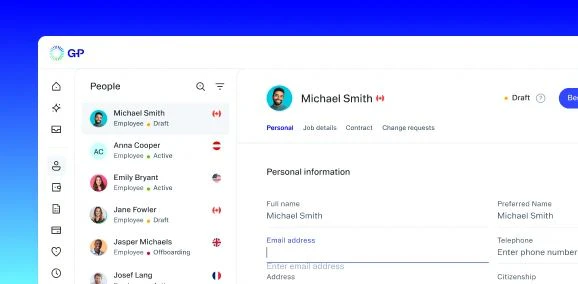
Managing classification manually across multiple jurisdictions is inefficient and risky. G-P handles global employment compliance for you, so you can hire the right talent, the right way.
G-P Contractor™: AI-powered compliance
G-P Contractor makes it easy to hire and pay contractors in 190+ countries. Our AI-powered Global Compliance Engine cross-checks your contractor agreements against local labor and employment laws in your target country. It identifies misclassification risks and gives you actionable suggestions on what to change to ensure compliance.
G-P Gia™: your global HR agent
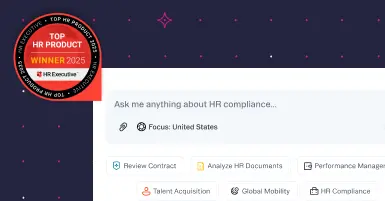
Gia is agentic AI for HR. It can answer your toughest compliance questions across 50 countries and complete worker classification tasks in minutes, such as:
-
Interpret contract excerpts to see if they lean toward employee or contractor characteristics
-
Explain how classification factors are applied in different jurisdictions
-
Guide you on what documentation or evidence may be needed to support proper classification
-
Answer questions about recent trends, regulatory changes, or case law affecting worker classification
-
Help you prepare for audits or reviews related to worker status
Gia analyzes your specific hiring scenario against our proprietary knowledge base of local labor laws to give you instant guidance on whether a candidate qualifies as a contractor or an employee, removing the guesswork from worker classification.

Convert contractors to employees with G-P EOR
If you need to reclassify a contractor, or simply want to retain a top performer full-time, G-P EOR ensures a compliant transition.
We hire the worker on your behalf and handle payroll, taxes, and benefits. This removes the burden of setting up your own entity and minimizes misclassification risk for your business.
See how Five Star used G-P to compliantly manage their global team.
Build your global workforce quickly and compliantly
Independent contractors give you expertise without the training costs. They’re a powerful asset, but only when managed correctly.
Whether you want to hire contractors or transition them to full-time employees, G-P can help. Our SaaS and AI-powered products – EOR, Contractor, and Gia – help companies of all sizes build and manage global teams.