








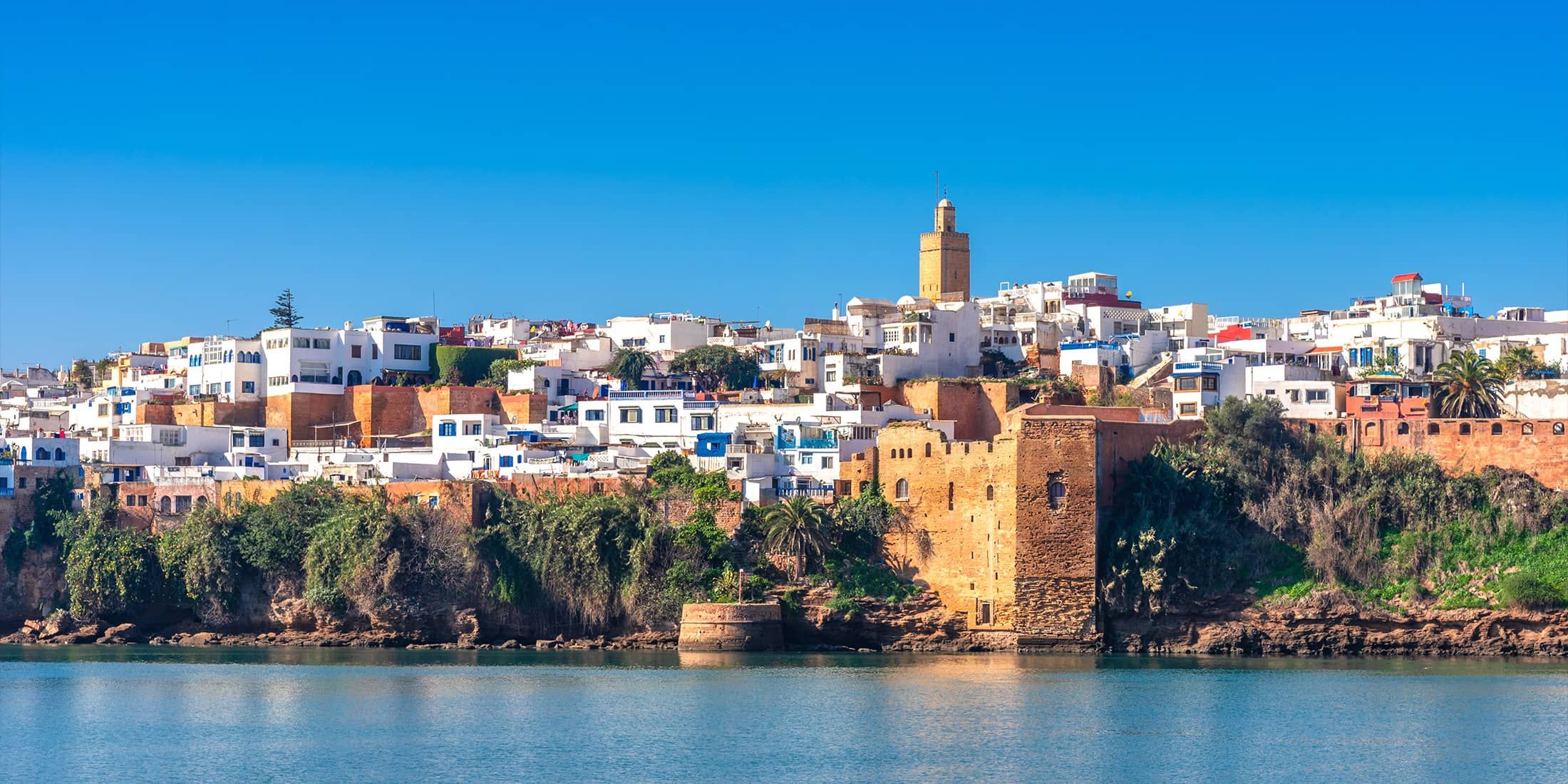
Morocco is an industrial trade hub in North Africa. It’s a strategic location for global companies looking for technical talent in IT, customer service, and business process outsourcing (BPO). The automotive and aerospace manufacturing industries power the economy, along with the world's largest reserves of phosphate and phosphate-based fertilizers.
Before expanding into Morocco, you’ll need to understand contracts, taxes, wages, benefits, and other employment laws. Our guide will tell you everything you need to know about hiring in Morocco.
What to know before hiring in Morocco
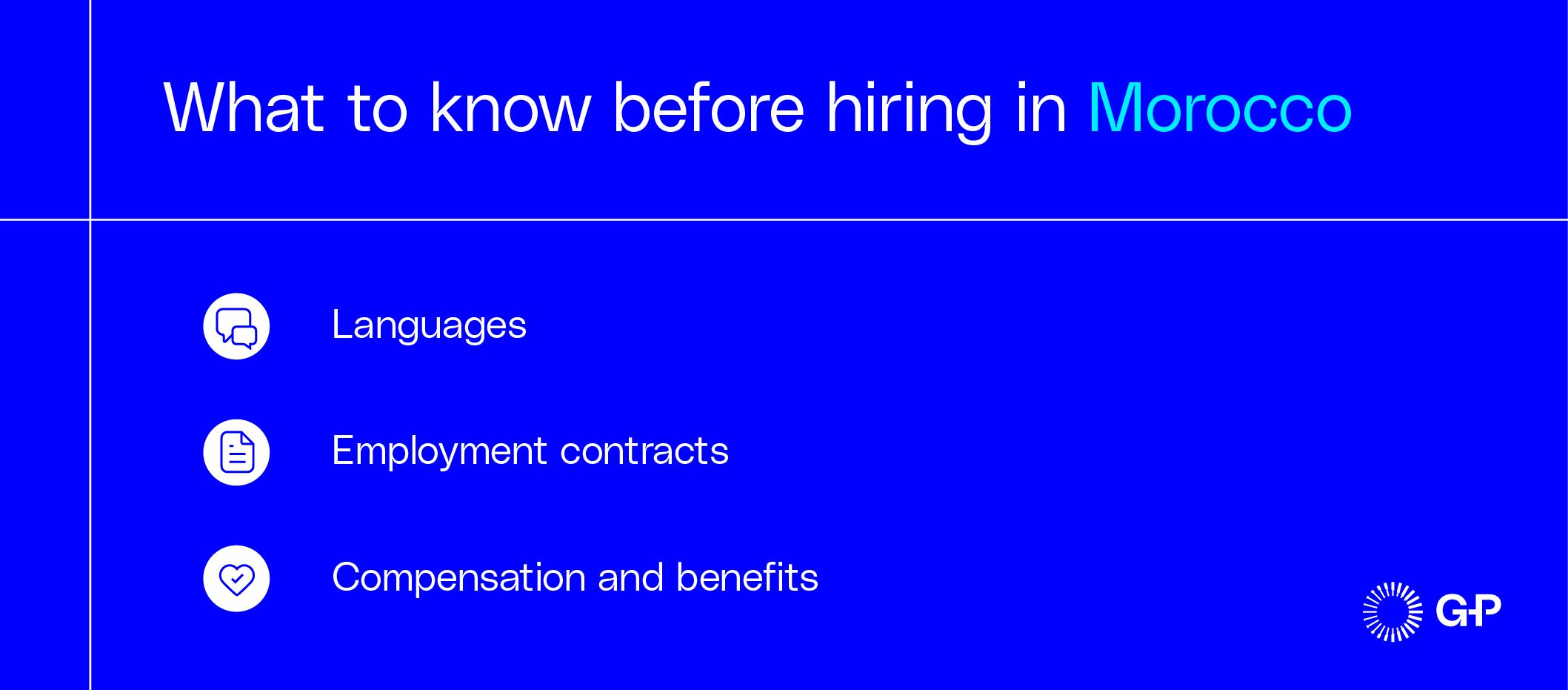
If you’re looking to hire employees in Morocco for the first time, there are legal requirements to be aware of. These norms and laws influence hiring practices in Morocco and many aspects of the employer-employee relationship, including compensation and benefits.
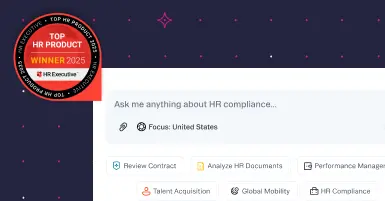
G-P Gia™, our AI-powered global HR agent, can answer your toughest compliance questions across 50 countries and all 50 U.S. states. Reduce your reliance on outside counsel and cut the time and cost of compliance by up to 95% with Gia.
Here are five things to know about hiring in Morocco.
1. The labor market in Morocco
Morocco’s labor force is over 12 million people. Between 70–75% work in agriculture and services. Third-level education continues to grow. Over 1.2 million students are enrolled in higher education.
2. Working hours and time off in Morocco
The workweek is 44 hours, except in agriculture where different rules can apply. Overtime is allowed and is paid at a higher rate. The premium depends on when and how the overtime is worked.
Morocco has 13 national holidays. Employees get paid annual leave and paid sick leave.
Maternity leave is 14 weeks at full pay. Paternity leave is three paid days. Special leave is allowed for marriage and bereavement.
3. Employment contracts in Morocco
Moroccan employment law requires a written contract for fixed-term employees and global workers. Indefinite-term contracts can be verbal, though a written contract is recommended for all employees. Employers have to provide each employee with a job card (carte de travail) listing the employer’s name, the employee’s name, social security number, and job function.
Written contracts have to include:
-
Job title
-
Duties
-
Salary
-
Benefits
-
Working hours
-
Leave entitlements
-
Probation
-
Termination terms
-
Notice period
Contracts have to be in a language understood by both parties. Arabic is standard, but bilingual contracts are advisable for non-Arabic speakers. All financial figures have to be in Moroccan dirhams (MAD).
4. Benefits in Morocco
Morocco requires all residents to enroll in the national healthcare system (AMO). Employers offer private health insurance as an extra benefit. Social security contributions are 6.74% for employees and 12.11% (uncapped) or 8.98% (capped) for employers. Pension fund participation isn’t universal but is expanding.
Extra benefits such as professional training, childcare, extra vacation, transportation allowance, remote work equipment, supplemental insurance, and fitness allowances are common but not mandatory.
5. Taxes in Morocco
Corporate income tax is progressive:
-
10% for net profits up to MAD 300,000
-
20% for profits between MAD 300,001 and 1M
-
31% for profits over MAD 1M
The VAT rate is 20%. There are reduced rates for certain goods and services. Both employers and employees contribute to professional training tax, health insurance, and social security. Moroccan residents are taxed on worldwide income. Non-residents are taxed only on Morocco-sourced income. The maximum personal income tax rate is 38%.
Top hiring hubs in Morocco
Some cities in Morocco are known for particular industries. Knowing what each region has to offer allows you to focus your hiring efforts in the right place and fill roles faster.
The top talent hubs in Morocco are:
-
Casablanca is Morocco’s largest city. It’s home to the Casablanca Finance City (CFC), an African economic and financial hub aimed at attracting regional headquarters.
-
Rabat is the capital city. Rabat's growth is driven by high-value services and public administration, including government ministries, diplomatic missions, and research centers.
-
Tangier is an industrial and logistics center. The Tanger Med port attracts manufacturing and export-oriented businesses. The port’s location on the Strait of Gibraltar makes it a key point between Europe, Africa, and the Americas.
-
Agadir is an important city for agriculture and fishing industries. Agadir processes and exports large volumes of seafood. The surrounding Souss-Massa region is the country’s most fertile agricultural area.
Key industries in Morocco
Understanding Morocco’s top industries allows you to benchmark salaries and benefits. You can use this insight to make smart choices about where to invest and grow your talent pool.
The top industries in Morocco include:
-
Automotive manufacturing: Morocco is a leading automotive hub in Africa, with a strong supply chain and skilled workforce. The country is the second-largest exporter of cars to the EU.
-
Aerospace: The country has a growing aerospace sector. It consists of 150 companies around Casablanca Midparc and the Tangier Free Zone. Global companies include Boeing, Airbus, and Lockheed Martin.
-
IT and offshoring: Morocco is recognized for its IT, customer service, and business process outsourcing (BPO) talent. It largely supports French-speaking and European markets.
-
Agriculture and agribusiness: Agriculture accounts for 15% of Morocco's GDP. A large portion of the workforce is engaged in agriculture, food processing, and related industries.
-
Renewable energy: Morocco is investing in solar and wind energy. The country aims to make renewables over 52% of their electricity source by 2030.
The cost of hiring an employee in Morocco
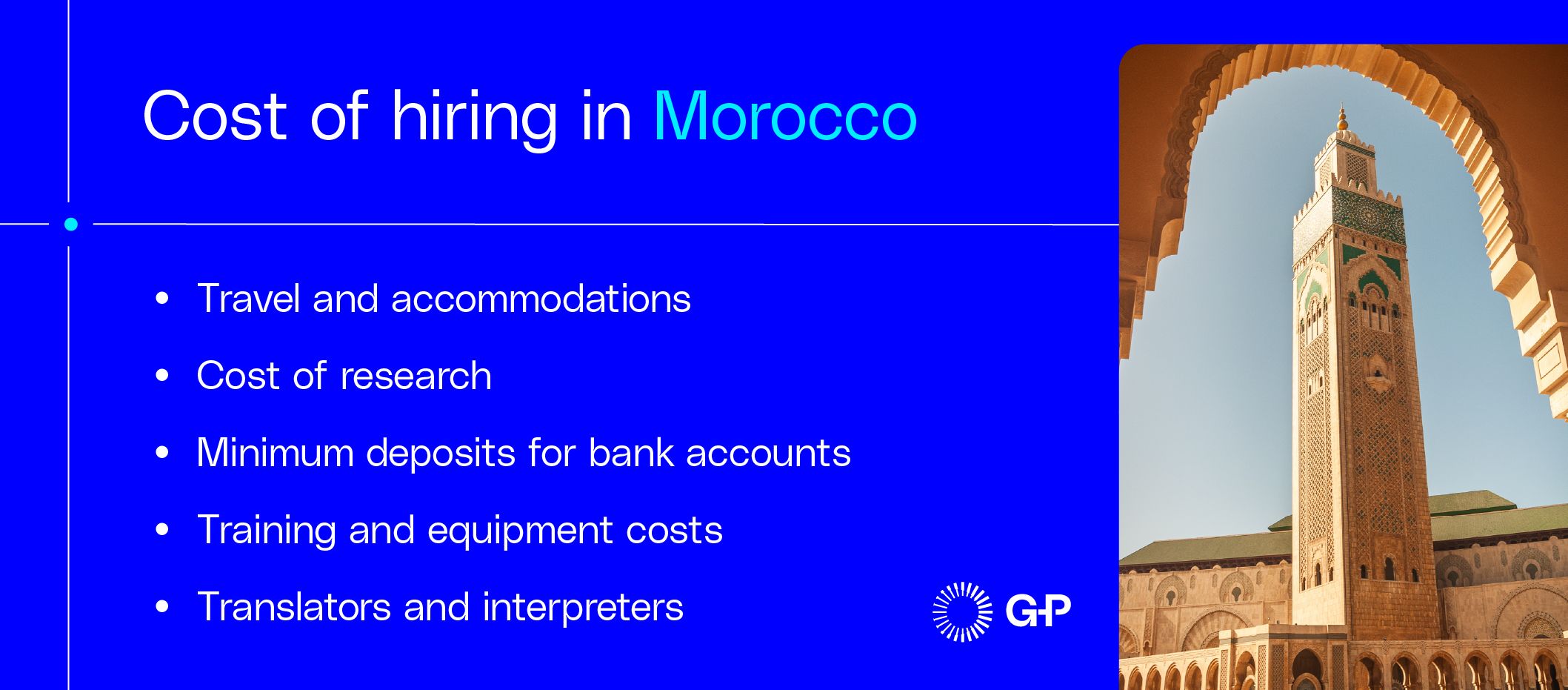
Whether you’re hiring one employee or an entire team in Morocco, expenses are inevitable. Budget for the following:
-
Setting up an entity (unless you partner with an employer of record)
-
Advertising job positions
-
Paying referral bonuses to employees with connections in Morocco
-
Paying an in-house hiring committee
-
Traveling to and from Morocco, including hotel stays, meals, and transportation
-
Partnering with a translator to draft documents or facilitate conversations (if applicable)
-
Using a background check service for screening candidates
-
Drafting compliant employment contracts, legal review, and consultation with HR and legal experts
-
Costs for providing computers, phones, and software licenses
-
Onboarding materials and initial training
-
Costs for maintaining required tax and payroll records and documentation
According to G-P Verified Sources from Gia, the employer burden rate in Morocco, which includes costs triggered on top of salaries, is about 21–26%, excluding accident insurance that can vary.
What does a company need to hire employees in Morocco?
Make sure you cover these essentials before expanding your team in Morocco:
-
Establish a legal entity in Morocco.
-
Register with the Moroccan tax authorities to get a tax identification number.
-
Register with the national social security fund (CNSS) for social security contributions.
-
Open a local bank account.
-
Comply with local employment laws, including employment contracts, minimum wage, and benefits.
Setting up a subsidiary in Morocco can take weeks or months. Use G-P EOR to hire full-time employees in Morocco without setting up your own entity. Build your team at a lower cost and with peace of mind that you’re doing so compliantly.
The steps to hiring employees in Morocco
The hiring process in Morocco is similar to the one you’re likely familiar with in your own country. The hiring process follows five basic steps: advertising the job, evaluating applications, interviewing candidates, sending job offers, and onboarding new employees.
1. Advertising job vacancies in Morocco
Prepare a clear job description outlining responsibilities, qualifications, and compensation. Post the vacancy on local job boards. ReKrute, Emploi, and ANAPEC are popular job sites in Morocco.
2. Evaluating job applications in Morocco
Screen CVs and application forms to shortlist suitable candidates.
3. Interviewing candidates in Morocco
Interview shortlisted candidates and, if needed, conduct tests or assessments relevant to the role you’re hiring for.
4. Making job offers in Morocco
Choose the most suitable candidate based on their qualifications, experience, and interview performance. Draft a written employment contract in compliance with Moroccan employment law. Make sure the contract outlines terms such as job title, salary, benefits, and working hours.
5. Onboarding new employees in Morocco
Now you can onboard new employees. Register your new hire with the CNSS and tax authorities. Provide orientation, training, and necessary resources for the new employee to start their role.
If you’re working with an EOR like G-P, you won’t have to worry about the administrative burden of onboarding. We’ll streamline the process, so you can focus on training your new hire and integrating them into your company culture.
Hiring contractors in Morocco
Working with independent contractors in Morocco can be a cost-effective way to test the market and build a presence without the commitment of full-time employees. Contractors based in Morocco understand local consumer behavior, rules, and business practices. They’ll be ready to start working quickly with their own equipment and established work processes.
Hiring contractors allows you to easily adjust your talent pool based on your business needs, without the complexities and costs of employment.
Before you enter an agreement with an independent contractor in Morocco, consider the following:
1. Employees vs. independent contractors in Morocco
It’s important to understand the difference between employees and independent contractors. In Morocco, employers hire employees to do work and, in return, pay them a regular salary and benefits. Independent contractors provide services. Unlike employees, contractors set their schedules, use their own equipment, and work on projects, rather than having an ongoing role.
2. Penalties for misclassification in Morocco
Classifying someone as a contractor when they’re not can lead to severe penalties. If misclassification occurs, you’ll have to:
-
Pay back taxes and social security contributions that have been withheld and remitted for employees.
-
Face fines and interest on unpaid amounts.
-
Deal with potential legal action from misclassified workers.
3. How to pay contractors in Morocco
G-P Contractor™ takes away the messy, time-consuming process of hiring and paying international contractors. You can create and issue contracts and pay contractors with just a few clicks, all while ensuring a compliant process.
Hire employees and contractors in Morocco with G-P
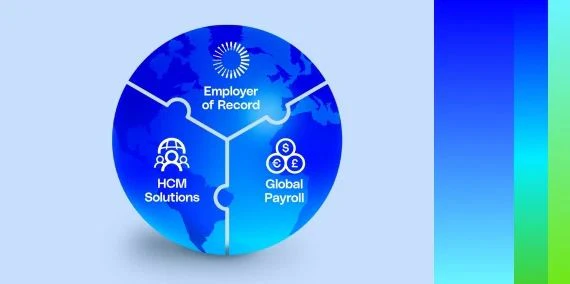
Our SaaS and AI-powered products – EOR, Contractor, and Gia – support companies as they build and manage global teams.
G-P is the recognized leader in global employment with more than a decade of experience, the largest team of HR, legal, and compliance experts, and a global proprietary knowledge base.
Make your expansion to Morocco easier with G-P. Contact us or book a demo today.