













Laws that regulate taxation and payroll in Australia appear complicated, but in many ways are comparable to those of other countries. In order to compensate employees correctly and remain compliant with taxation and payroll rules, it is essential to have a comprehensive understanding of the nation’s regulations.
Taxation rules in Australia
Australia operates under a pay-as-you-go system. This means that employers must withhold employee taxes, which should be paid to the government.
You could potentially pay payroll taxes on benefits and superannuation — Australia’s retirement fund — in addition to wages. Every state levies their own payroll tax on employers once the annual payroll reaches a certain level (this is determined on a state-by-state basis). The percentage of this state tax varies by state but is generally between 4.5% to 7%. Employers must also give 11% of employees’ ordinary time earnings (OTE) to superannuation.
Australia payroll options for companies
Companies that expand to Australia, have different payroll options to choose from:
- Larger companies may opt to pay employees themselves. Before you do this, you must set up a subsidiary, register your business, and hire additional team members to handle payroll and human resources matters. You will also need a keen understanding of tax, withholding, and other payroll requirements.
- Another option is to hire an Australia payroll processing company to administer your payroll. Keep in mind that all responsibilities and liabilities related to taxation and compliance will remain with your company.
- Alternatively, you can work with a global employer of record, such as G-P, that will enable you to hire and pay employees without setting up an entity.
How to establish payroll in Australia
You cannot hire or pay employees without first setting up a subsidiary in Australia or working with an employer of record. Setting up a subsidiary can take months and could slow down the hiring process. Once you get set up, you’ll also need to establish at least one local bank account. The majority of employees in Australia are paid electronically through bank transfers.
Australia’s tax laws state that all employees must receive a pay slip within 1 working day of payment. This slip can be paper or electronic. The most common pay cycles are 12, 26, and 52, which you should keep in mind when setting up the frequency of pay.
Entitlement/termination terms
Employees are entitled to time off work including national and state public holidays, annual leave, and community service leave. Employers also need to give employees 10 days of personal/carer’s/sick leave as needed.
The best way to establish termination terms is through a strong employment contract that sets a notice period and outlines any severance pay employees are entitled to.
Streamline your global payroll with G-P
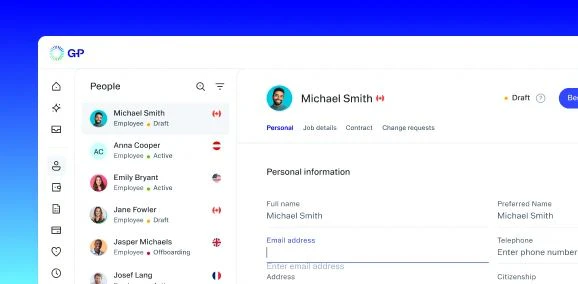
G-P is the #1 rated EOR by all top industry analysts. We manage the entire employee lifecycle, including payroll, for your teams in 180+ countries. Get on-time, error-free payroll with flexible payment options and easily add bonuses, commissions, and exceptions in just a few clicks.
G-P EOR is the preferred partner for leading HCM, PEO, and payroll platforms. Bring your workforce data together in one place to maintain existing workflows while guaranteeing consistent and accurate data across your integrated systems.
Book a demo to learn more about our global employment products, including G-P Contractor and G-P EOR help streamline your global payroll.